

6 min read
There is an idea at the heart of the greatest journeys that has never really gone out of fashion. It simply changed clothes.
From the late seventeenth century through to the early nineteenth, the Grand Tour was the defining rite of passage for Europe’s educated elite. Young aristocrats, British, predominantly, but also German, Russian, and American, left home for months, sometimes years, to travel through the great cities and landscapes of the continent. Paris. The Loire Valley. The Alps. Rome. Not to accumulate experiences in the modern sense, but to be formed by them. To return home different from the person who had departed.
The itineraries have shifted. The traveller has evolved. But the underlying impulse, to journey through places that carry genuine cultural weight, in the company of people who understand them deeply, at a pace that allows something to actually land, is precisely what drives the most discerning clients today.
France and the United Kingdom were always at the heart of the Grand Tour. They still are. And with Decouvertes DMC Group now operating across both destinations, it has never been easier to build a journey worthy of the tradition.
Paris: The City That Formed Everyone
No Grand Tour began anywhere else. Paris was, and remains, the first great education. But the Paris worth building into a modern Grand Tour is not the Paris of the obvious itinerary. It is the Paris of the private collections, the families who have been acquiring art for four generations and occasionally open their doors. The Paris of the ateliers, where craftspeople working in centuries-old techniques produce things that will outlast everything around them. The Paris of the late dinner, the long conversation, the gallery visit arranged for after closing time by someone who knows the director personally.
For travellers who think they know Paris, this is the version that reminds them they do not. Yet.
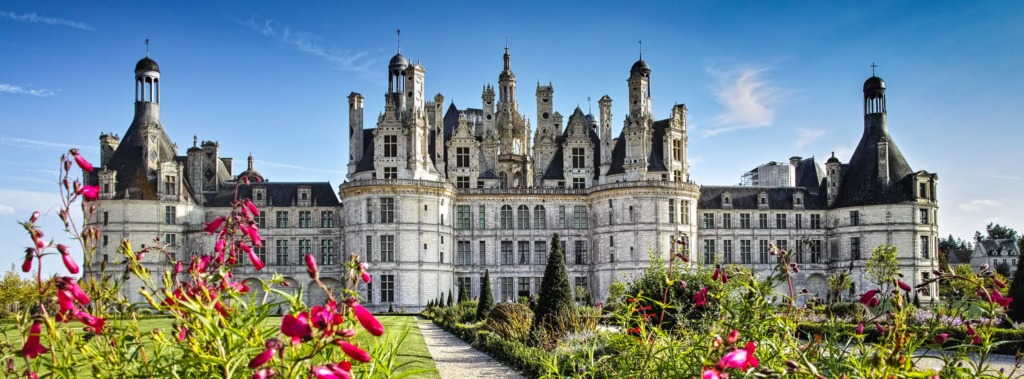
The Loire Valley: Power, Beauty, and the Art of Living
The original Grand Tourists came to the Loire for the same reason clients still do: nowhere else in France makes the relationship between power, landscape, and aesthetic ambition quite so legible. The châteaux are not museums. They are arguments,about what civilisation can produce when resources and imagination are brought together without restraint.
A private visit to Chambord at dawn, before the gates open. A morning in a Renaissance garden with a historian who has spent thirty years understanding why every hedge is exactly where it is. A lunch in a wine cave with a vigneron whose family has worked the same parcel since the seventeenth century.
This is the Loire the Grand Tourists were looking for. It is still here.
Crossing the Channel: The Journey as Punctuation
One of the qualities that made the Grand Tour genuinely formative was the travel itself, the days between destinations that allowed what had been experienced to settle before the next encounter began.
The crossing from France to the United Kingdom carries something of that quality. Whether by rail through the Channel Tunnel or by private crossing, it marks a shift, in language, in light, in the particular texture of a culture. Clients who make this crossing as part of a longer journey almost always remark on it. The contrast is the point.
London: The Other Great Capital
Where Paris is concentrated and vertical, a city that rewards the pedestrian who moves slowly through its arrondissements, London is lateral and surprising. It sprawls. It contradicts itself. It has seventeen different personalities operating simultaneously, and the skill of building a great London itinerary lies in knowing which three or four to combine for a particular traveller.
For the culturally driven traveller, this means the private members’ clubs and their libraries, the auction house previews, the gallery openings in Mayfair, the dinner with a collector who agreed to meet because the introduction came from someone they trust. For the client whose interests run toward history, it means the city beneath the city, the layers of Roman, medieval, Georgian, and Victorian London that most visitors walk over without knowing it.
London rewards the same quality of attention the Grand Tour was designed to cultivate. It simply requires someone who knows where to direct it.
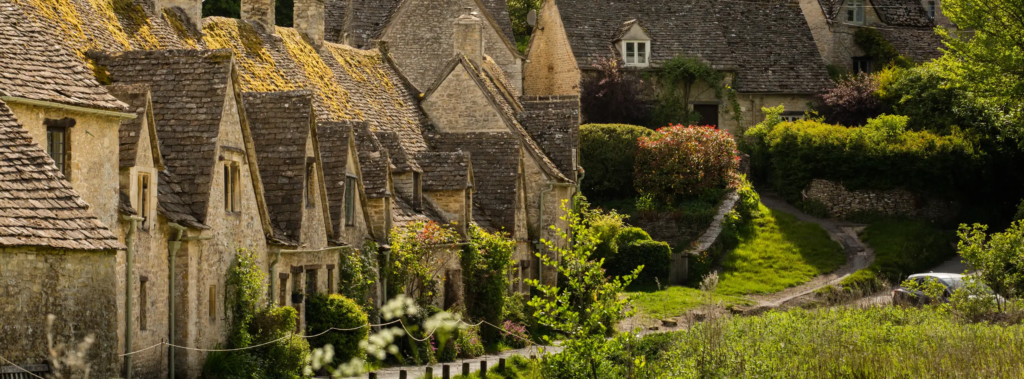
The Cotswolds: The England That Formed the Idea of England
No destination in the United Kingdom does more work in the imagination of international travellers, and few deliver more completely when approached correctly. The Cotswolds is not a backdrop. It is a landscape that took centuries to look the way it does, shaped by wool wealth, aristocratic ambition, and a particular English insistence on the relationship between a house and its garden. For travellers coming from France, where that relationship is expressed through formality and geometry, the Cotswolds offers a counterpoint: the same depth of care, expressed through apparent naturalness.
A private visit to an estate not open to the public. A morning with a garden designer who has spent decades working in the tradition of the great English landscape movement. A lunch in a pub that has been feeding travellers since the coaching era, in a village that appears to exist outside of time. These are small things. They are also, consistently, what travellers remember most.
Edinburgh: The Final Education
The original Grand Tour rarely made it this far north. That, in retrospect, was a significant omission. Edinburgh is one of the most intellectually and visually compelling cities in Europe, a place where Enlightenment philosophy, medieval history, and a very specific Scottish relationship with beauty and difficulty coexist in a remarkably small area. The Old Town and the New Town are, effectively, two cities built on top of each other, each with its own logic and its own rewards.
For clients who arrive having moved through Paris, the Loire, London, and the Cotswolds, Edinburgh functions as a finale that resets everything. It is colder, darker, and more austere. It is also, for many travellers, the moment the entire journey clicks into place. A private tour of the castle with an historian who specialises in the Jacobite period. A whisky tasting in a distillery that has been operating since 1824, led by a master distiller who regards their work as a form of philosophy. A dinner in a Georgian townhouse where the host’s family has lived for two hundred years. The Grand Tour, completed.
For travel advisors building programmes for travellers who want more than a collection of beautiful places, who want a journey that actually means something, France and the United Kingdom together offer a depth that very few other combinations can match.
At Decouvertes DMC Group, we design itineraries for both destinations with the same level of access, expertise, and care. The Grand Tour was always about what you brought back. We make sure there is something worth bringing. Send your requests to inquiries@decouvertesdmc.com, and let’s build a journey worthy of the tradition.
Decouvertes DMC Group. France. United Kingdom. The journey between.