

6 min read
There is a version of France and the United Kingdom that most travellers never see.
Not because it is hidden. Not because it is inaccessible. But because they always come in summer, when the light is generous, the terraces are full, and the experience, however beautiful, is shared with everyone else who made the same decision.
Winter strips both destinations back to something more essential. The pace slows. The places that perform for visitors in July reveal, in December and January, what they actually are. For travellers who have done the obvious seasons, winter is often where the most memorable journey begins, and for travel advisors looking to differentiate their offering, it is one of the most underused arguments in the calendar.
Paris in December: The City at Its Most Itself
There is an argument, not universally held, but held by those who know Paris well, that December is the finest month to be there.
The light arrives low and golden, even on grey days. The city decorates itself with a restraint that other capitals rarely manage. The restaurants are full of Parisians rather than tourists, which changes the energy of a room entirely. The museums are navigable. The streets around the Marais and Saint-Germain, so congested in summer that the pleasure of walking them is almost entirely lost, become again what they were designed to be: places for slow, unhurried movement through extraordinary architecture.
For ultra-luxury clients, December in Paris also means access to a cultural calendar that peaks at year’s end, the major auction house sales, the private gallery events, the end-of-year dinners at restaurants that spend the rest of the year fully booked. A traveller who thinks they know Paris in summer will find an entirely different city waiting for them in winter.
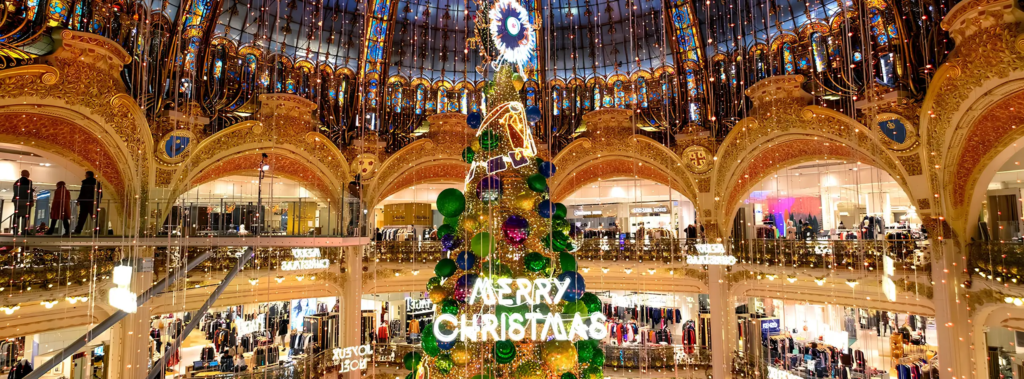
Alsace: The Christmas Market as Cultural Experience
The Christmas markets of Alsace are, at this point, famous enough that they require careful handling. Strasbourg’s Christkindelsmärik draws millions of visitors each year. Colmar’s market is photographed endlessly. The risk, as with any destination that has become iconic, is that the experience becomes a simulacrum of itself, a set designed for consumption rather than a genuine cultural encounter.
The difference, as always, lies in the approach. Arriving before the market opens, with a local guide who understands the craft traditions behind what is being sold rather than simply where the best vin chaud is poured. Visiting the smaller markets, Ribeauvillé, Kaysersberg, Eguisheim, where the crowds are thinner and the atmosphere closer to what these gatherings have always been: community events with deep roots in Alsatian history and identity. Staying in a property that existed long before tourism arrived and will exist long after it has passed through.
For the right travellers, Alsace in December is not a Christmas market destination. It is an immersion in one of France’s most distinct regional cultures, at the moment when that culture expresses itself most fully.
Normandy in Winter: The Coast Without the Crowd
Few transformations in France are as complete as what happens to the Normandy coast between October and March.
The seaside towns that fill with Parisian summer visitors, Deauville, Étretat, Honfleur, become something else entirely. Quieter, more austere, and in many ways more honest. The cliffs at Étretat, so photographed in summer that the image has almost replaced the experience, are in winter simply extraordinary: the light is sharper, the sea more present, the sense of being somewhere significant entirely unmediated.
The D-Day sites, too, are experienced differently in the colder months, with the space and quiet that their weight demands. A private guided visit to the landing beaches in January, with a historian who has spent decades working in this landscape, is one of the most affecting experiences we build for travellers in France. It requires winter to work properly.
London in December: Tradition as Luxury
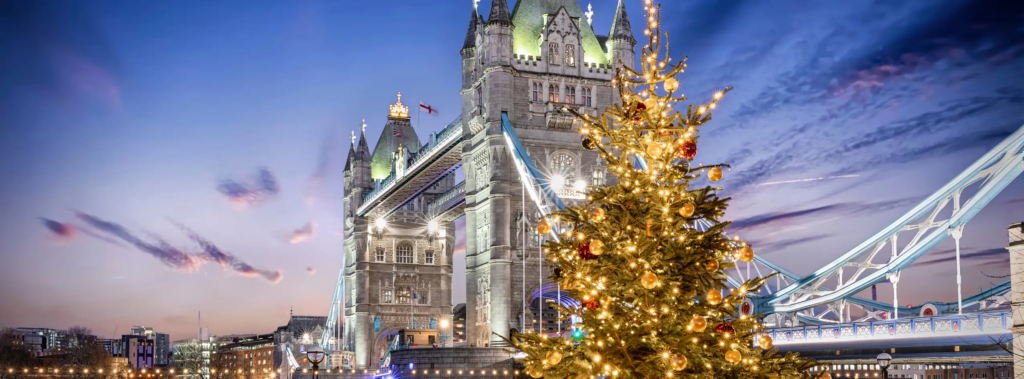
London has always known how to do winter.
The city’s relationship with the dark months is not reluctant, it is practiced, almost enthusiastic. The theatres fill. The private members’ clubs become the centres of social life they were designed to be. The shop windows along Bond Street and Jermyn Street are dressed with a care that approaches theatre. The markets at Borough and Spitalfields operate at their best when the cold gives people a reason to linger.
For ultra-luxury travellers, London in December also means the cultural calendar at its most concentrated: the major West End productions that open for the Christmas season, the private views and auction previews that mark the end of the art year, the charity galas and dinners that bring together the city’s most interesting people in its most beautiful rooms.
A private box at the Royal Opera House for a seasonal production. A bespoke shopping experience along streets that have been dressing discerning clients for two centuries. A dinner in a Mayfair townhouse that belongs to someone who agreed to receive four guests because the introduction came from a partner they trust. This is London in December, and it is a very different proposition from London in July.
Scotland in January: The Elemental Finale
This is where the winter journey finds its conclusion, and where it becomes something that clients carry with them long after they have returned home.
Scotland in January is not for everyone. It is cold, often dramatically so. The days are short. The landscape is stripped of everything that is not essential, which means what remains, the lochs, the glens, the ancient forests, the coastline, is visible in a clarity that the greener months obscure. Private estate stays in the Highlands, where a fire is lit before you arrive and dinner is prepared from what the land and the sea have provided that day, offer a quality of comfort that feels entirely earned by the landscape surrounding it.
A private whisky tasting at a distillery that has been producing since the early nineteenth century, with a master distiller who regards the winter months as the best time to talk about their work because there are no coach parties outside. A morning on a Highland estate with a gamekeeper who has spent forty years learning to read this particular stretch of land. A loch at dawn, the water entirely still, with nothing between the client and the horizon.
This is the version of Scotland, and of winter travel, that travellers describe years later, without being asked.
Winter in France and the United Kingdom is not a compromise. It is a choice, made by travellers who have understood that the best experiences are rarely the most crowded ones, and that a destination reveals itself most honestly when it is not performing for an audience.
At Decouvertes DMC Group, we build winter itineraries across both destinations with the same depth of access and curation we bring to every season. The calendar is open. The experiences are waiting.
Send your requests to inquiries@decouvertesdmc.com, and let’s make the case for winter together.